Link Assistive eyes 100% growth, further expansion at Tonsley Innovation District
Scaling Up to Give More People a Voice: Link Assistive at Tonsley
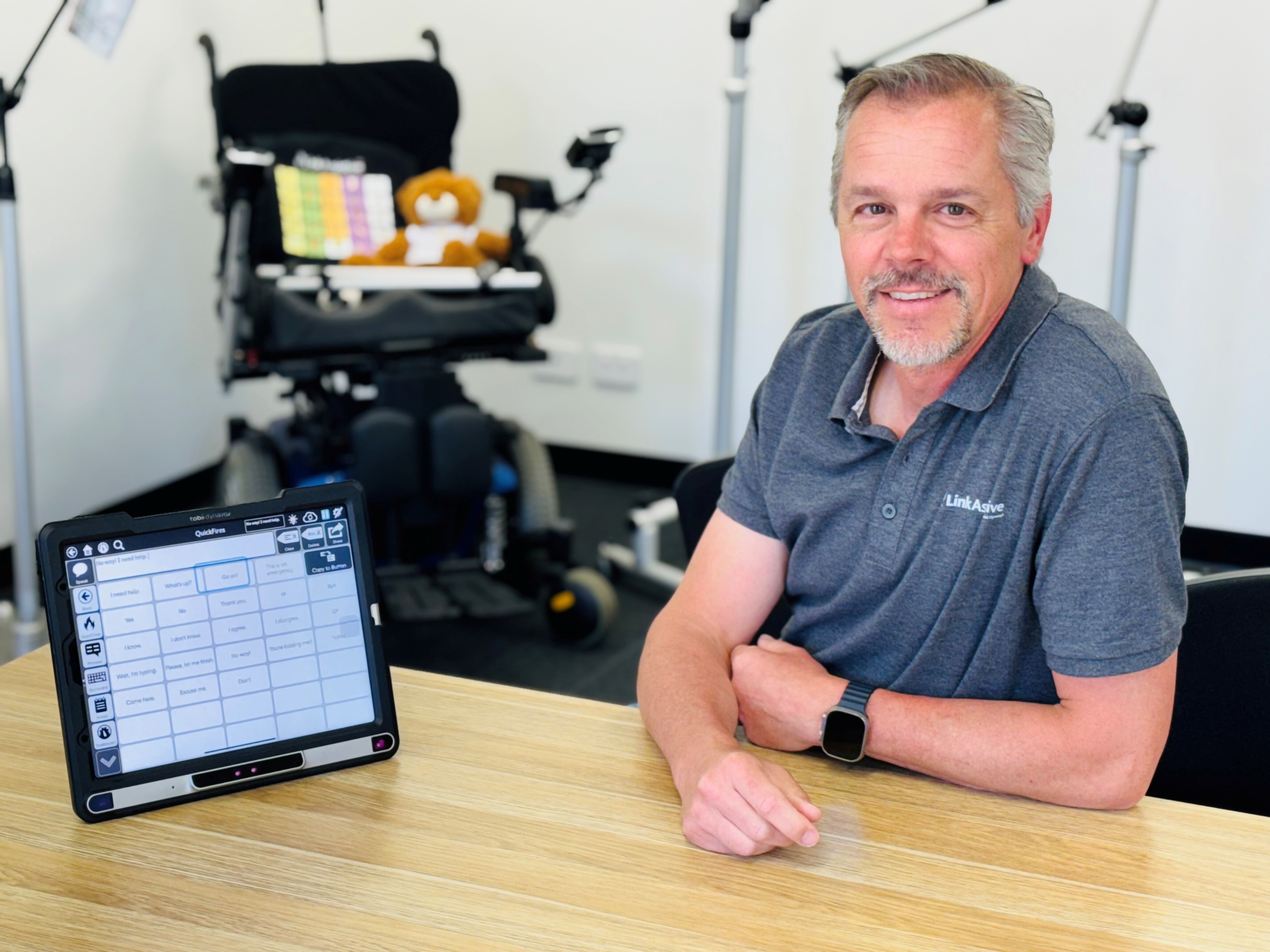
ADELAIDE: When Bas Tijdhof first moved Link Assistive to the Tonsley Innovation District three years ago, growth was always on his mind.
The company had created a strong foothold in the Australian market since starting in 2008, supplying assistive communication to people with disabilities such as autism, cerebral palsy and motor neurone disease (MND).
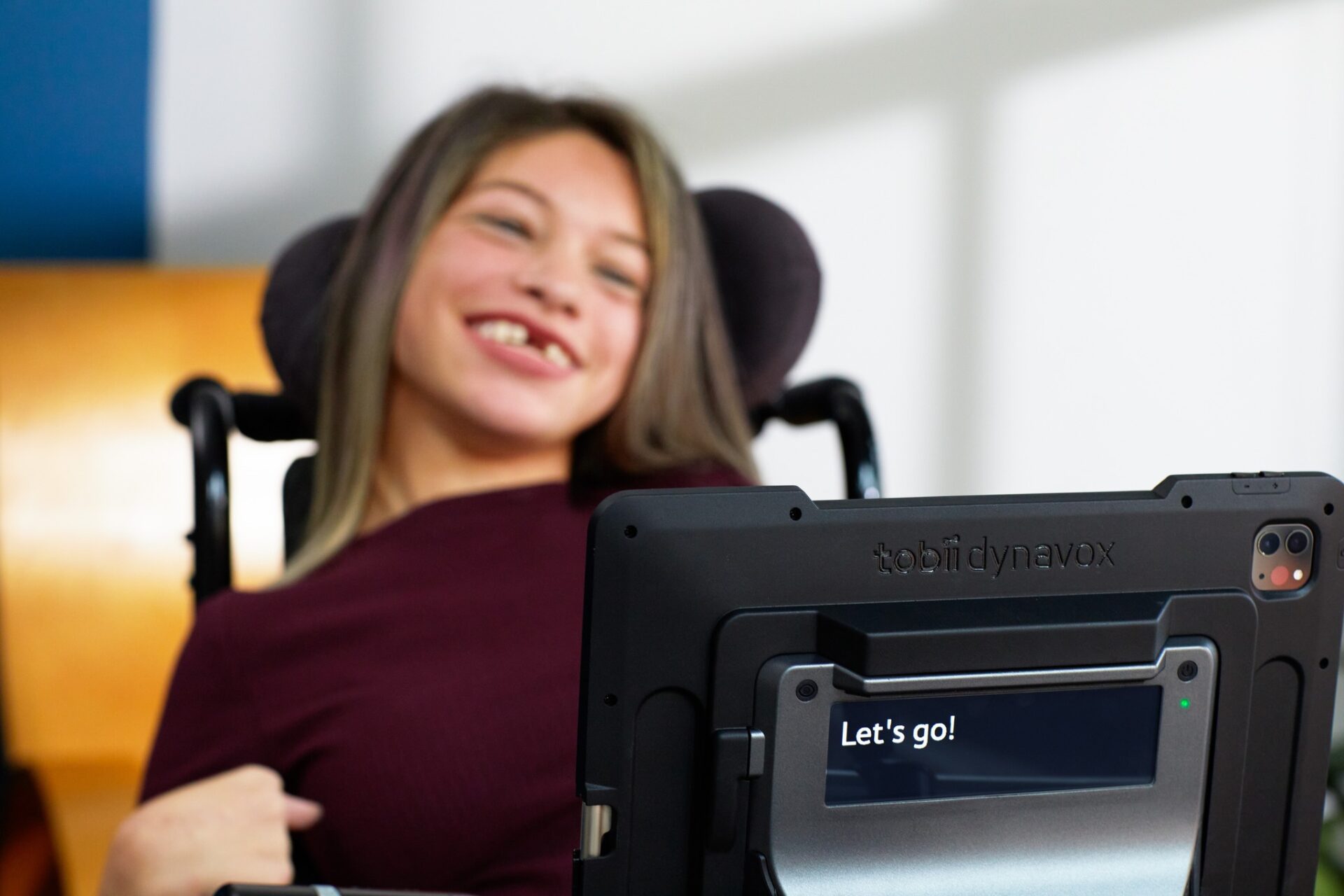
In particular, Link Assistive’s partnership with Swedish company Tobii Dynavox had enabled greater penetration of eye-gaze technology, where the user looks at a keyboard or phrases on a screen and an infrared-sensitive camera tracks their eye to spell out and select words.
In October last year, that partnership became even stronger when Link Assistive was acquired by Tobii Dynavox. Its backing is enabling Link Assistive to grow its workforce by 50% to 33 by the end of 2026, a time when Bas believes the company will have also doubled its revenues when compared with pre-acquisition.
“Having Tobii Dynavox behind us is enabling us to scale up a lot quicker and give a lot more people a voice,” Bas said.
“We have been able to invest in equipment to make sure that, if there’s someone needing the device, particularly those with MND, we have the stock here so they don’t have to wait, either to trial the product or access it through the NDIS.
“We’ve been able to grow the company significantly in Australia but now we also have a business in New Zealand and there are opportunities in the APEC region in general that we will be able to explore by being part a larger entity.”
And there is huge unmet need. The World Health Organisation estimates that only one in 10 people worldwide who need assistive technology have access to products. Estimates for those needing communication assistance are even worse, with just 2% of people in need around the world receiving services.
The upsides, on the other hand, are significant – and not only from the human perspective.
A Swedish study commissioned by Tobii Dynavox found investment in high-tech assistive communication solutions for people with disabilities doubled the user’s quality of life. The study also found the technology generated economic benefits worth three times the cost of the device over a five-year period through reducing healthcare needs and increasing work ability for users, family members and caregivers.
“The human benefit is super clear, but the economic benefit is also massive,” Bas said.
“The technology is enabling users to do what they once did and they can continue working, continue communicating with their kids, controlling home automation and more. They don’t need to rely on the spouse to open the door or to pick up a phone because that can all be done with the device.
“Having access and independence is key, and that’s what assistive technology can provide.”
Bas hints that Link Assistive’s growth will require further expansion at the Tonsley Innovation District, which has been the company’s home since 2022.
“Tonsley is where innovation happens and where there’s opportunity for networking and collaborating with other relevant organisations and companies,” Bas said.
“For example, we’re connected with Flinders University through their biomedical engineering department. Our clinical team does guest lectures there and one of their students works here and is doing a master’s project.
“We work with Autism SA, with their clinical staff using our devices and resources for trials and assessments with their clients. We also work with Secure State who provide us with our cyber security while our international guests stay at the Mantra Tonsley.
“So it just seems like a really good hub for us to be part of and there’s this room for us to expand.”
One of the most high-profile users of assistive technology is former AFL legend and MND ambassador Neal Daniher, who made headlines earlier this year when AI recreated his own voice through his eye gaze device.
For Bas, who has been driven by a passion to help people with disabilities since starting in the industry in the Netherlands more than two decades ago, the personal stories are the most motivating.
“We have a user in Queensland who has been using our devices for the last 10 years,” he said.
“She first came to us an eight-year-old with cerebral palsy and her physical movement meant it was not functional for her to use any other access method than eye gaze.
“We have helped her transition through different eye gaze devices and software as she has grown and she has now graduated from high school. She’s such a gun, we love working with her and she’s making the most out of life using assistive technology.
“It’s just so great to watch her grow.”
Together at Tonsley
Stay up to date with the latest news, developments events and activities at Tonsley Innovation District