Micro-X’s Tonsley X-ray tech drives global growth
Tonsley Innovation District based medical technology company Micro-X has taken a major step in its growth trajectory, securing significant investment and partnerships in South-East Asia.
The ASX-listed company recently signed a $3.3 million agreement with the Malaysian Ministry of Health – its largest single deal to date – to supply its Rover Plus mobile digital radiography machines to hospitals across the country.
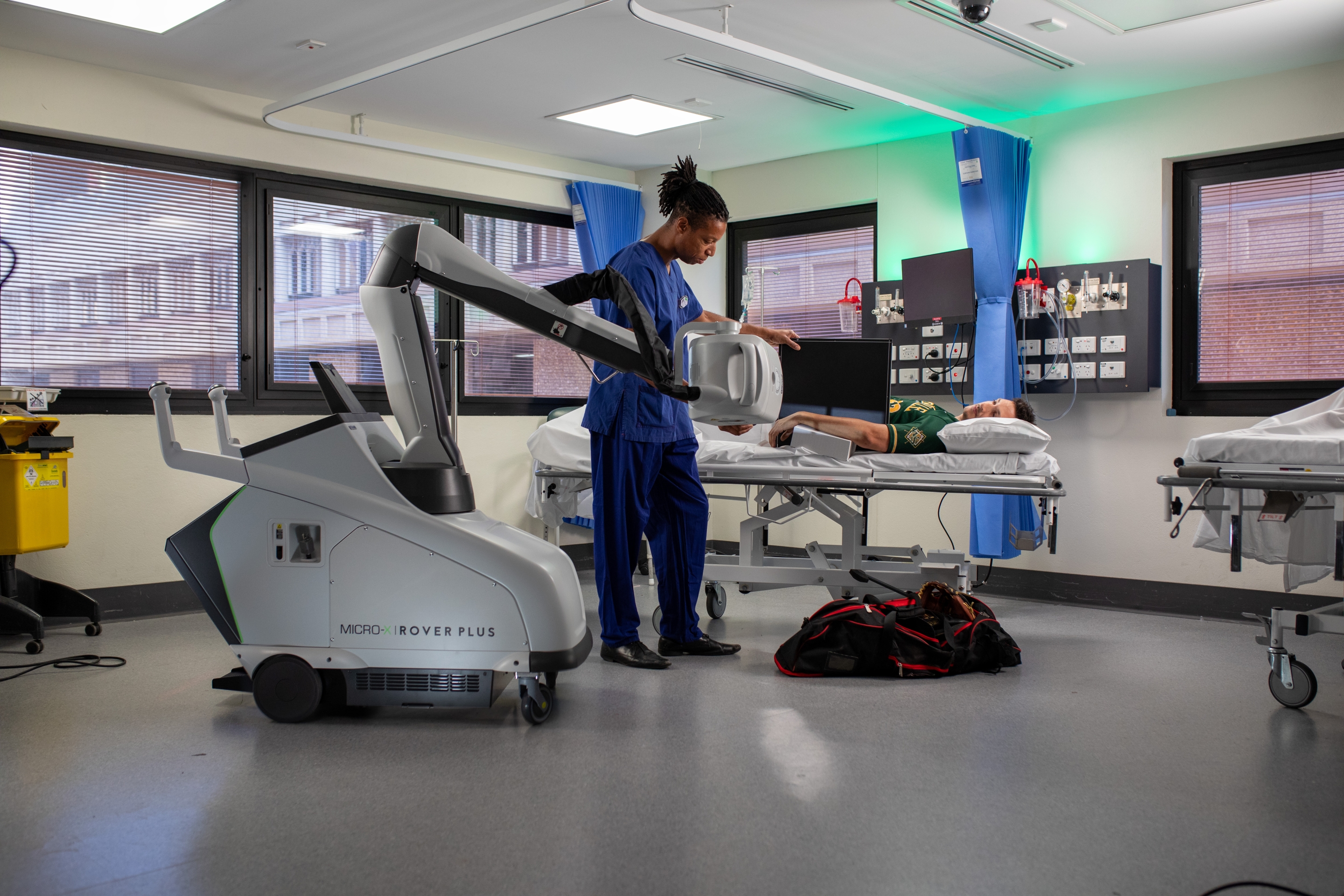
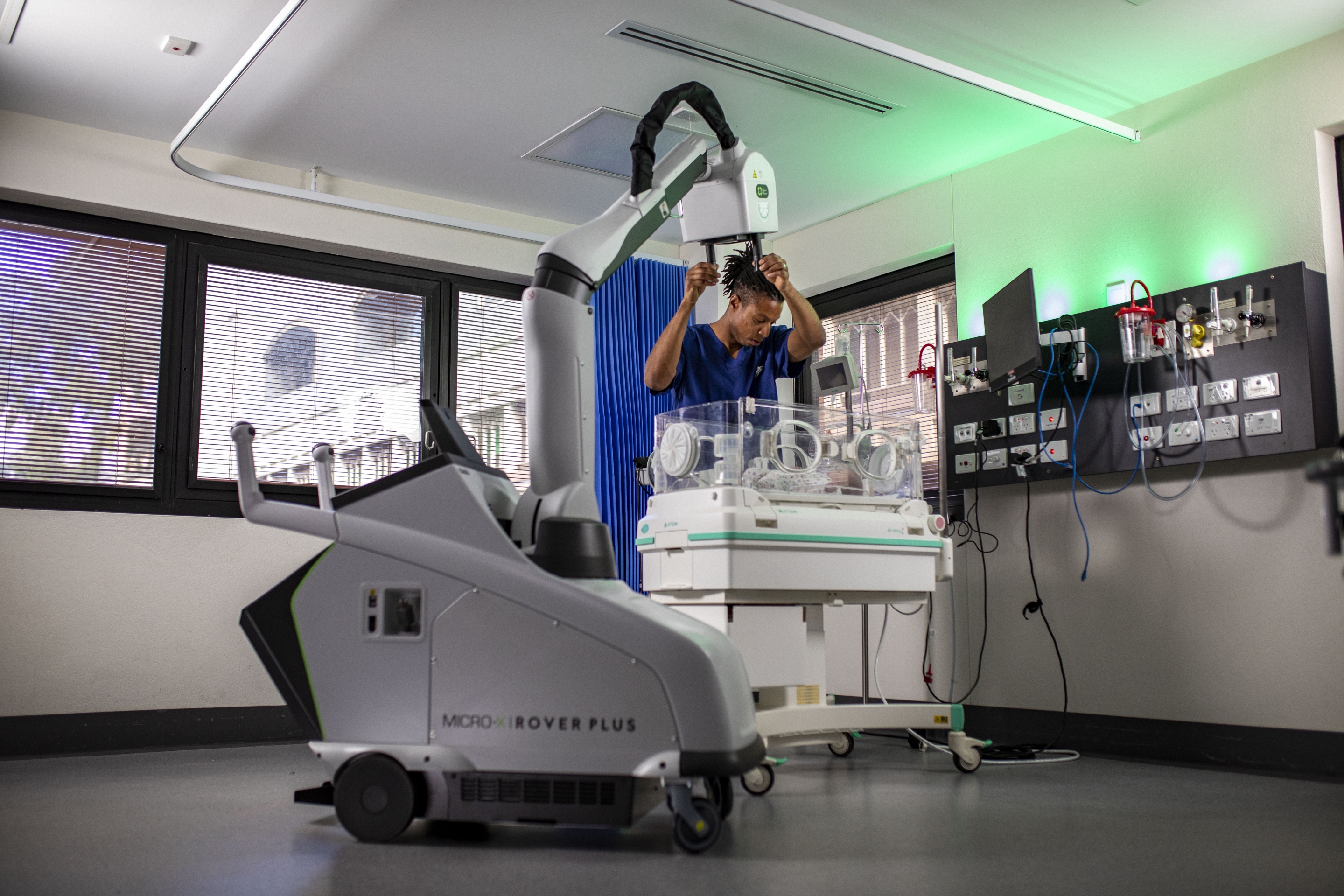
Designed and manufactured at Tonsley Innovation District, the Rover Plus is a lightweight and portable mobile X-ray system that delivers diagnostic-quality images equivalent to traditional X-ray machines while weighing just 112 kilograms. This is made possible by Micro-X’s Nano Electronic X-ray (NEX) tube technology, which uses a world-first carbon nanotube electron emitter to create smaller, lighter and electronically controlled X-ray tubes without compromising image quality.
“We’ve already demonstrated the success of this technology with 29 units currently in active use across Ukraine. They can operate all day on battery power and simply be recharged overnight,” Micro-X CEO Kingsley Hall said.
“Because of their compact size, they’re also very easy to clean and move. This makes it simple to disinfect the unit between patients and transport it from room to room as needed.
“This is central to what we stand for; bringing imaging to the patient, not taking the patient to the imaging.”
South-East Asia represents a major growth opportunity for Micro-X, with its proximity and ability to service it swiftly. Earlier this year, Micro-X also entered into a $5.6 million, five-and-a-half-year partnership with Malaysian security systems supplier Billion Prima to develop a parcel and baggage scanner to service the South-East Asian market.
As one of the first tenants of the Tonsley Innovation District, Micro-X has grown significantly since moving to the precinct in 2016. The company now has 95 employees and occupies more than 2,200 square metres of cutting-edge facilities under the MAB.
The Tonsley environment has been instrumental in that success, providing not just the space and infrastructure to innovate, but also the collaborative ecosystem that connects industry with research and education.
Micro-X has developed a strong partnership with Flinders University, particularly with its Biomedical Science division, which is also based at Tonsley Innovation District. Many of Micro-X’s employees are Flinders graduates who have grown alongside the company as it has scaled up in recent years.
From its Tonsley base, Micro-X designs and manufactures its own x-ray tubes, high-voltage generators and switches for use in its healthcare and security imaging products.
The company’s next milestone is set to begin over the coming months, with human trials of its Head CT in partnership with the Australian Stroke Alliance getting underway. The regulatory trials will take place in Melbourne and Adelaide at the Royal Melbourne Hospital, Box Hill Hospital and Royal Adelaide Hospital.
The human trials are designed to demonstrate that Micro-X’s technology can produce diagnostic images comparable in quality to those from a standard CT scanner, while offering a more efficient alternative which is lighter, more affordable and contains no moving parts.
Weighing just 70 kilograms – compared to a 500-kilogram conventional CT scanner – this lightweight, mobile device uses 21 miniature X-ray tubes positioned above a curved detector. Instead of rotating 300 times per minute to capture hundreds of images, as a traditional CT does, Micro-X’s system fires all 21 nanotubes simultaneously to capture 21 images at once.
Repeating this sequence five times to produce 105 images in just 10 seconds, these images are then reconstructed into a detailed three-dimensional view of the brain using Micro-X’s software.
Micro-X is also set to begin trials of the technology in ambulances in partnership with SA Ambulance, after securing a $4.4 million grant from the Australian Government’s Industry Growth Program. The 18-month trial will be a world first to evaluate a stroke-capable ambulance, testing the usability and workflow of a vehicle equipped with an onboard CT scanner.
“Approximately 85% of strokes are caused by blood clots with early intervention critical. Therefore, if you can diagnose and provide the appropriate treatment within the first hour it can dramatically improve outcomes and save lives,” Mr Hall said.
“Our product is designed to provide a CT scan of a patient’s head immediately when it’s needed, not waiting until they’re transported to hospital, saving crucial time.
“I believe the Head CT will be a game changer in stroke diagnosis, offering a truly lifesaving impact by enabling faster detection and treatment.”
The Head CT is designed to fit into the side wall of a standard ambulance and swing out as needed.
Micro-X is also preparing to scale up manufacturing to meet the anticipated demand for its Nano Electronic X-ray (NEX)tubes as these trials progress through the regulatory phase and move towards being market ready.
“Looking ahead we are preparing for a substantial increase in volume over the next two to three years from a manufacturing perspective,” Mr Hall said.
“Our Rover Plus has one X-ray tube, whereas our Head CT has 21 miniature tubes. Once these go to market, the need for scaling up production will grow significantly and manufacturing will increase substantially.
“We’ve expanded significantly at Tonsley over the past 10 years and have a strong facility, but further expansion down the line will inevitably need to happen.”
Adding to its growing momentum, earlier this year, Micro-X was awarded an up to $25 million contract by the US Advanced Research Projects Agency for Health (ARPA-H) to develop the world’s first full-body mobile CT. The 225-kilogram device will fit inside a van, bringing hospital-grade imaging to patients.
This is part of the agencies Platform Accelerating Rural Access to Distributed and Integrated Medical Care (PARADIGM) program, which aims to reduce healthcare inequities and improve access in rural areas. ARPA-H will fund the development of the medical device over the next five years.
Micro-X's cutting edge technology
Together at Tonsley


Stay up to date with the latest news, developments events and activities at Tonsley Innovation District